

Ensures the high precision,high steady and high efficiency of our machines


tree drip line
Field Notes on a Solenoid Valve : what’s working now, and what to watch From a plant floor in Shijiazhuang—No.188, Fengshou Road, Chang’an district, Hebei Province, China 050041—to bottling lines and RO skids halfway across the world, the modern Solenoid Valve is having a bit of a renaissance. The premise is simple: electric signal in, fluid control out. The unit opens or closes fast, can be automated or remote-controlled, and—when you get the specs right—just runs. Many customers say the performance is stable and the learning curve is tiny. I’d agree. Industry trends I’m seeing Energy-aware coils (Class F/H, low inrush) and optional 100% ED duty for continuous service. Lead-free brass and 316 SS bodies to meet drinking water regs; frankly, compliance is non-negotiable now. Smarter spools: position feedback, optional NAMUR interfaces, and IIoT gateways—still niche, but growing. IP65–IP67 coil encapsulation for washdown; food and beverage folks love this. Technical specifications (typical) Real-world use may vary, but this is the envelope I see most often for a general-purpose Solenoid Valve in water/air service. Port size 1/8"–2" (BSP/NPT) Body materials Brass (lead-free option), SS304/SS316 Seal options NBR, EPDM (potable), FKM (high temp/chem) Pressure range 0–16 bar ≈ (steam variants up to 10 bar) Temp range -10 to +180 °C (by seal) Voltages 12/24 VDC, 110/220 VAC, 50/60 Hz Response time 20–200 ms (N/C and N/O) Ingress rating IP65 (IP67 on request) Service life ≥ 1–10 million cycles, application-dependent Process flow and QA—how a reliable Solenoid Valve gets made Materials: forged brass or SS316 bodies; copper-wound coils; plunger/guide in SS; NBR/EPDM/FKM seats. Methods: CNC machining, precision lapping of seats, coil winding, epoxy potting, 100% visual QC. Testing: pressure/seat per ISO 5208 (Rate A for soft seats), dielectric and insulation resistance, IP per IEC 60529, coil heat rise under 100% ED, burst test with 3× rated pressure. Typical data: seat leakage 0 bubbles/min @ 6 bar water; insulation ≥100 MΩ @ 500 VDC; coil temp rise ≈ +45 °C after 1 hr. Where it shines Water treatment (RO, softeners), HVAC, bottling and CIP, compressed air, irrigation, light chemical dosing, even low-pressure steam. One facilities manager told me their Solenoid Valve “just clicks and works”—not poetic, but honest. Vendor comparison (snapshot) Vendor Coil/Class IP Certs (≈) Lead time Notes WAT Equipment (Hebei) F/H, 100% ED IP65–67 CE, RoHS; NSF/UL options ≈ 2–4 weeks Flexible customization, fair MOQ Global Brand X F, intermittent/continuous IP65 UL 429, CE 4–8 weeks Premium price, broad catalog Industrial Brand Y H, 100% ED IP67 ATEX/IECEx (select) 6–10 weeks Hazardous area specialist Customization gotchas (and wins) Body/seal pairing: EPDM for potable water (NSF/ANSI/CAN 61), FKM for oils/heat, 316 for corrosives. Function: N/C vs N/O vs latching; choose based on fail-safe and power budget. Coil voltage/connectors: DIN 43650, flying leads, or M12; add surge suppression if you can. Steam duty: guided plungers, high-temp coils, derate pressure—don’t skip this. Quick case notes Water plant retrofit: 48 pcs Solenoid Valve on RO skids, EPDM seals, 24 VDC. Leak test passed ISO 5208 Rate A; measured power draw down ≈18% with low-watt coils. Unplanned downtime dropped by 22% over 6 months (maintenance logs). Beverage line CIP: 316 body + FKM, IP67 coils. After 1.2 million cycles, only 1 seat swap reported. Operator feedback: “Install was five minutes; coil runs warm but stable.” Certifications and compliance checklist Look for UL 429 or CE, IP rating per IEC 60529, materials to NSF/ANSI/CAN 61 for potable water, RoHS/REACH, and if you’re in a hazardous area, ATEX/IECEx coil assemblies. Sources and standards UL 429: Electrically Operated Valves ISO 5208: Industrial valves — Pressure testing IEC 60529: Degrees of protection (IP Code) NSF/ANSI/CAN 61: Drinking Water System Components RoHS Directive 2011/65/EU
Latest News
2026-04-06 02:02
Introduction to the LF55 Pressure Switch The LF55 Pressure Switch is a critical component in modern industrial and mechanical systems, designed to monitor and regulate pressure levels automatically. Developed by Hebei JIRS Import & Export Co., Ltd. , this device serves as a safety mechanism in pumps, hydraulic systems, and machinery, ensuring optimal performance and preventing potential failures.
2026-04-06 03:18
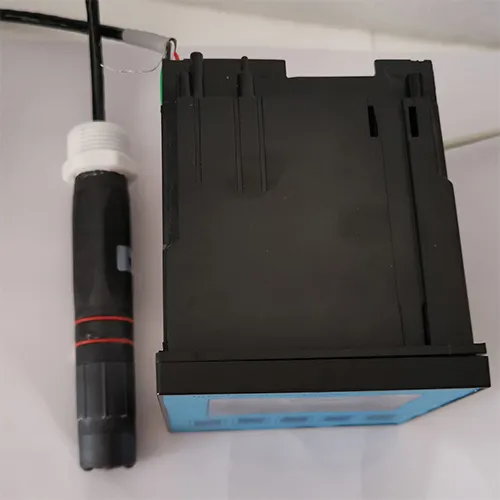
Precision control in water treatment has never been more essential. From municipal plants to aquaculture and swimming pools, managing water chemistry is crucial—and that’s where the ph orp controller comes into play. This high-performance instrument monitors and regulates both pH levels and oxidation-reduction potential (ORP), ensuring that water stays within safe and efficient operational paramet
2026-04-06 02:20
```html Pressure Switch - Hebei JIRS Import & Export Co., Ltd. Pressure Switch: Precision and Reliability in Industrial Applications Discover the advanced Pressure Switch by Hebei JIRS Import & Export Co., Ltd., designed for safety, efficiency, and durability in critical systems. Introduction to the Pressure Switch The LF55 Pressure Switch is a critical component in industrial and commercial syste
